
Pulse Energy Joins Unified Bharat eCharge: Charge Your EV with BHIM UPI!
In India, electric car users might soon get an easy way to find a charger and pay for the electricity. Pulse Energy has partnered with...
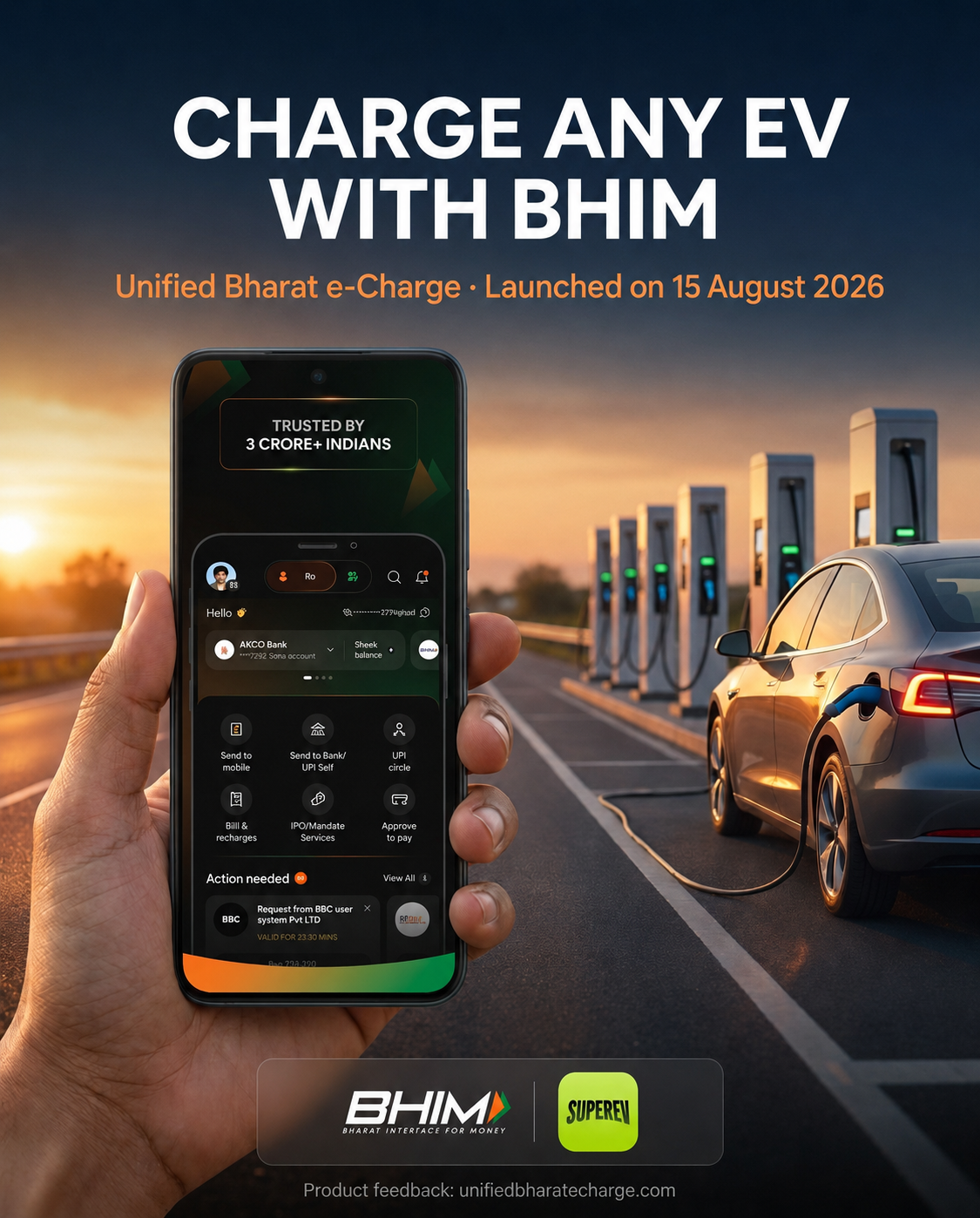
BHIM UPI EV Charging Facility

In India, electric car users might soon get an easy way to find a charger and pay for the electricity. Pulse Energy has partnered with Unified Bharat eCharge (UBC). A new country-wide charging network which is bringing public EV charging to the BHIM UPI app. This will allow the users to avoid confusion caused by a number of different charging apps and operator wallets.
Problems that Unified Bharat eCharge will solve
The Indian public charging market has seen a fast development. Yet it has become very disorganized. Users usually have to manage different apps, accounts, and pre-paid balances depending on the operator who provides the station.
It is supported by the Ministry of Heavy Industries (MHI), Bharat Heavy Electricals Limited (BHEL) and National Payments Corporation of India (NPCI). The initiative operates using an open Beckn protocol. While its underlying digital public infrastructure is developed by the Network for Humanity team. The main concept of the program is very simple. Allow different networks to integrate into one infrastructure rather than operate separately from each other.
Lalitha Nataraj, CEO, NPCI BHIM, “Multiple apps and wallet loading for EV charging is exactly what we wanted to solve for . Discover EV charges on BHIM payments app, charge, pay and go. Simple solution for everyone”
How Charging Will Take Place Through BHIM
In order to simplify the process for users, it should look quite familiar under the current first implementation:
- Open the BHIM application and find an UBC charging station.
- Scan the QR code of the charging station.
- Charge using UPI payments directly from your bank account.
This way there will be no need to prepay into an account for the charging service. As well as to open an additional account with each particular charging service provider. The network will gradually expand within the cities and national highways, and may become available even through other apps related to payments, mobility and automotive industry. Pulse Energy will assist in that integration with the UBC protocol.
Akhil Jayaprakash, Co-Founder & CEO, Pulse Energy said “EV charging should not require drivers to think about which network they are using before they can plug in. The idea behind UBC is to make charging more accessible by bringing different networks onto a common infrastructure. For users, that means a simpler payment experience, while operators get the opportunity to serve users beyond their own applications.”
Pulse Energy’s Function: Linking 10,000+ Chargers
Pulse Energy is one of the very first companies to be certified as a technology enabler for charge point operators on UBC. It collaborates with over 100 charging providers and already runs a connected network of 10,000+ EV chargers. The objective is to help operators integrate their current installations into the new network without any changes in hardware and preserving their brand.
Such an approach could work to everyone’s advantage. Operators maintain their hardware and brand recognition but gain access to a larger number of EV users. Users in their turn receive a larger network because of more stations joining UBC.
Rollout Schedule & Feedback Channel
UBC was launched on India’s 80th Independence Day and is likely to be launched within the same time frame with charging stations launching one after another. The Ministry of Heavy Industries has been working with the development of the national unified hub with BHEL as the implementation agency and NPCI BHIM Services Ltd for design and development.
Suggestions and feedback from the users regarding their suggestions can be made available through unifiedbharatecharge.com. It is expected to reach the concerned people from the government dealing with the network.
ELCTRIK Speaks
Public chargers have always been one of the biggest worries for those thinking about buying an EV. This could help in easing out this worry, thus making long journeys possible. In case UBC is able to achieve this objective of interoperability. It is expected that even more chargers join hands with them, thus creating a virtuous cycle in the system. The key to success here would lie in the execution part of the plan, that is, the speed at which the chargers become part of the network and its performance.