
India Proposes Vehicle-to-Vehicle Communication From 2028 to Boost Road Safety and Support C-V2X Technology
Phase-by-phase implementation of the Vehicle to Vehicle (V2V) Communication System in India has been proposed by the Ministry of...
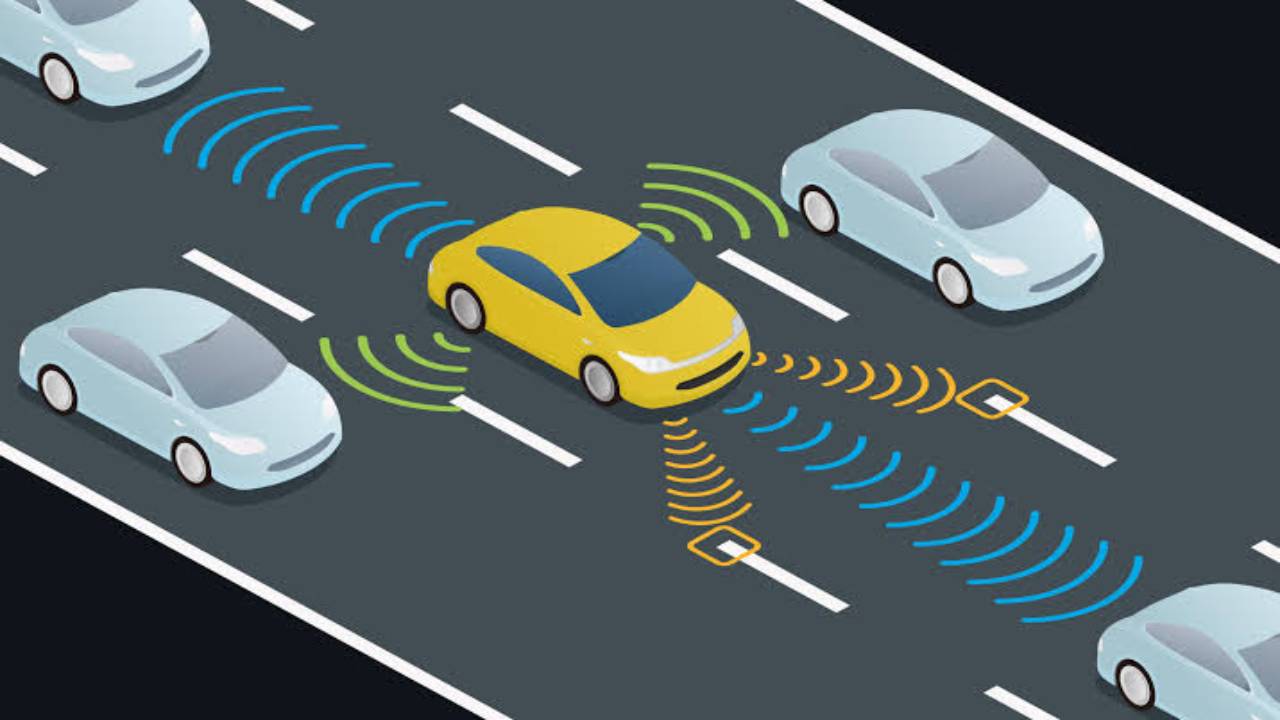
vehicle to vehicle communication

Phase-by-phase implementation of the Vehicle to Vehicle (V2V) Communication System in India has been proposed by the Ministry of Road Transport & Highways. The proposal comes through a draft notification to bring changes to the Central Motor Vehicles Rules, 1989.
This news was released by PIB Delhi on August 3, 2026. The system would enable exchange of safety-related information between two vehicles in real-time and also inform the driver/vehicle system about certain risks that might not even be visible otherwise.
Also Read: Two-Wheeled Road Ambulances in India to Get New Safety and Fitness Rules From October 2027
Draft Rules Proposed for Safer Connected Mobility
Through V2V Communication, neighboring vehicles can exchange information like:
- Speed and direction.
- Position and Acceleration.
- Braking of vehicles.
- Collision risks.
- Lane movements and Road Safety.
- This would enable connected mobility for vehicles plying on the roads of India.
It will be expected to enable connected mobility and enhance the situational awareness of vehicles plying on Indian roads.
Mandatory Installation From October 2028 Onwards
According to the draft notification, a two-phase timeline is being suggested for vehicles under categories L, M and N.
As per the proposed schedule:
- All the vehicles manufactured on or after October 1, 2027, will need to meet AIS-230 requirements. If the vehicles are equipped with V2V communication systems.
- Vehicles that will be manufactured on or after October 1, 2028, will have to be equipped with V2V systems meeting AIS-230 requirements.
- The step-by-step approach will be expected to allow sufficient time to stakeholders to get prepared for compliance with the new norms.
C-V2X Technology to Operate on 5.9 GHz Frequency Band
The V2V systems, which will be covered by the proposed regulation, will feature factory-fitted On-Board Units utilizing Cellular Vehicle-to-Everything (C-V2X) technology.
The suggested operating frequency is the 5.875 GHz to 5.925 GHz band, which has been assigned for V2V and other ITS applications. The Department of Telecommunications, through Notification G.S.R. 466(E) dated June 10, 2026, has granted exemption from licensing of this frequency band. The use of a dedicated band is expected to ensure reliable communications among vehicles and also aid in the creation of a larger connected transportation network.
How V2V Can Work Alongside ADAS?
Most current systems for automobile safety depend on cameras, radar, lidar or any other type of on-board sensor. While these devices are effective, their efficiency may be compromised by various factors including obstruction, bad visibility or detection distance.
V2V communication can provide data on vehicles that may not necessarily be within the line of sight of the automobile. For instance, a car coming up behind a traffic queue can get a notification on braking of cars several miles away. Likewise, an incoming emergency car can send out an alert before becoming visible to the motorists nearby.
The technology is expected to enhance the performance of ADAS as opposed to replacing it. Some initial safety applications under AIS-230 could include:
- Emergency Brake Alert.
- Forward Collision Warning.
- Wrong-way Driving Alert.
- Emergency Vehicle Alert.
AIS-230 Sets The Technical Standards
AIS-230 is being formulated with a view to setting out the minimum technical, functional, performance, environmental, and security requirements that need to be met by the V2V systems fitted in vehicles.
Radio performance, frequency stability, output power, receiver sensitivity and selectivity, GNSS-based positioning, electrical system, electromagnetic compatibility, and power supply are some of the topics included in the standard.
Cybersecurity and communications security measures have also been incorporated into the standard. It would become necessary considering the fact that connected vehicles would have to continuously communicate through wireless networks with safety-related information.
Comments Sought from Stakeholders
The Ministry added that suggestions and comments on the proposed rules would be considered after 30 days.
The decision came in the light of recommendations made by a government-constituted Task Force on Intelligent Transportation Systems. It had recommended the adoption of the 5.9 GHz ITS/V2X frequency band in order to enhance road safety. The development of AIS-230 was also discussed at the 56th Meeting of the Central Motor Vehicles Rules Technical Standing Committee on May 7, 2026.
If implemented, the framework could give India a common foundation for connected vehicle safety systems and encourage the wider adoption of proactive accident-prevention technologies.
ELCTRIK Speaks
The development of the V2V strategy by the Indian government can be considered to be a very good move. Since the strategy can make road safety proactive instead of being reactive in nature. However, in order for the strategy to succeed, it will have to rely on affordable technology, efficient communication system, as well as robust cybersecurity.