
VinFast’s India Problem: Big Sales Numbers, But Where Are the Real Buyers?
India’s electric-car market is booming. But VinFast’s growing sales conceal an awkward question: how much of its success comes from...
Vinfast India

India’s electric-car market is booming. But VinFast’s growing sales conceal an awkward question how much of its success comes from customers choosing its cars, and how much from a business ecosystem that can buy them in bulk?
India’s electric-car revolution is arriving faster than many expected. In September 2026, retail sales of electric passenger vehicles reached approximately 36,000 units, nearly double the figure recorded a year earlier. Electric cars accounted for 8.5% of passenger-vehicle retail sales, up from 5.7% in September 2025. High fuel prices, growing consumer acceptance, a wider choice of models and improvements in charging infrastructure are helping push the market forward. Geopolitical instability and oil-price volatility have added to the economic case for going electric.
Yet a growing market can flatter a weak business. The arrival of more electric-car buyers does not mean that every manufacturer has earned their confidence. For VinFast, the Vietnamese carmaker that entered India in 2025, the distinction between market growth and genuine consumer demand may prove particularly important.
Also Read: A Comprehensive Electric 2 Wheeler Sales Report for September 2026
A rising tide, but who is buying the cars?
On the surface, VinFast's numbers look encouraging. The company registered approximately 2,963 electric passenger vehicles in September 2026, its strongest monthly performance since entering the Indian market. That gave it about 8.2% of the month's electric passenger-vehicle market, placing it fourth among manufacturers.
The year-on-year growth rate, at more than 49,000%, looks extraordinary. It is also a reminder of the limitations of percentage growth: VinFast sold only six electric passenger vehicles in September 2025. A small starting point can turn a modest business into a statistical sensation.
The more revealing question is who is buying those vehicles.
VinFast belongs to Vietnam's Vingroup ecosystem, which also includes Green and Smart Mobility, commonly known as GSM. The ride-hailing operator uses VinFast vehicles, creating a ready-made commercial customer for the carmaker. In July 2026, Mint reported that Green SM accounted for roughly 27% of VinFast's sales in India during the early part of the 2026–27 financial year. Its share of monthly sales between April and July ranged from 21% to 33%, according to the report's analysis of government registration data.
That is not a trivial detail. It changes how the company's growth should be interpreted.
Fleet purchases are genuine sales. They put cars on the road, generate revenue and can help a manufacturer achieve scale. Taxi operators can also demonstrate the economics of electric mobility in daily use. But a fleet operator's purchasing decision is different from that of a family spending its savings on a car it expects to own for years.
A fleet buyer may prioritise cost per kilometre, vehicle availability, bulk-purchase terms, maintenance arrangements and utilisation. A private buyer is more likely to weigh resale value, reliability, service accessibility, comfort, brand reputation and the prospect of obtaining replacement parts without prolonged delays.
The distinction matters even more when the fleet operator belongs to the same corporate ecosystem as the manufacturer.
The real test is whether that demand is followed by sustained purchases from unrelated customers.
Tata and Mahindra have something money cannot quickly buy
India's electric-car market is led by companies with a considerable advantage: familiarity.
Tata Motors sold about 14,800 electric passenger vehicles in September 2026, accounting for approximately 41% of the market. Mahindra sold about 7,800, giving it roughly 22%. Together, the two Indian manufacturers accounted for close to 63% of electric passenger-vehicle sales that month. VinFast's share was about 8%.
Their advantage is not simply national sentiment. Tata and Mahindra have spent years building relationships with Indian motorists, dealerships, suppliers and service networks. They understand local driving conditions, road surfaces, traffic, climate and the compromises buyers make when choosing a family car.
Tata's Nexon EV and Punch EV, alongside models such as the Tiago EV, have helped introduce electric mobility to buyers across different price points. Mahindra's electric SUVs appeal to customers who want an EV without abandoning the size, styling and road presence associated with conventional Indian SUVs.
Their extensive experience with the domestic market also gives buyers a more familiar point of reference. A customer considering an electric Tata can draw on the experience of neighbours, colleagues and existing Tata owners. A prospective VinFast buyer has a much smaller pool of local ownership experience to consult.
That matters in a country where the purchase of a car remains a major household decision. A showroom demonstration can sell the promise of a vehicle. Confidence in the company's ability to repair it five years later is harder to manufacture.
Nor should the advantage be mistaken for unconditional loyalty. Tata and Mahindra face their own complaints about service, software, reliability and resale values. Indian brands do not automatically deliver a better ownership experience. Their head start is that customers already know them, and their wider businesses provide a degree of reassurance that a newcomer must work hard to match.
The service problem is more serious than the sales pitch
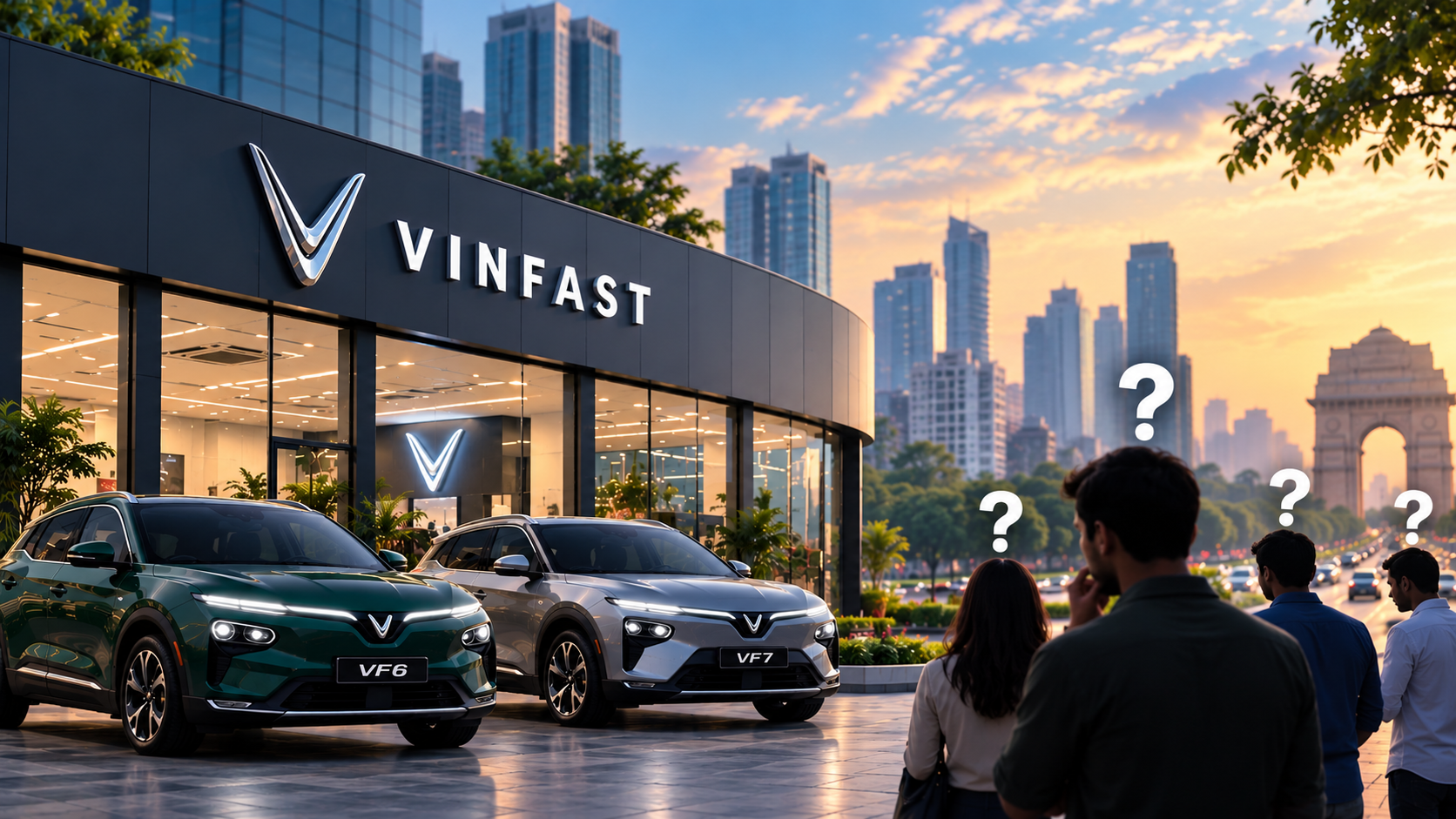
VinFast has entered India with products that attract attention. Its VF 6 and VF 7 electric SUVs compete in segments where buyers expect contemporary styling, a substantial feature list and convincing performance. The company has also expanded its range with the VF MPV 7.
But a car is a long-term relationship disguised as a purchase. The quality of that relationship becomes apparent after delivery, when a warning light appears, a software problem develops or a component needs replacing.
Owner reviews published on CarWale and Autocar India contain complaints about after-sales support, advertised versus experienced driving range, charging-related problems and the handling of technical faults. Some reviewers describe positive driving experiences, too. These reports are individual accounts, not a representative survey of all VinFast owners, and they do not prove that every vehicle suffers from a defect. They do, however, identify areas in which the company needs to demonstrate that its service operation can meet customer expectations.
For a relatively new brand, such complaints carry a disproportionate cost. Established manufacturers can draw on years of ownership data and extensive dealer relationships. A newcomer has little accumulated goodwill to absorb a bad experience.
The issue is particularly acute with electric vehicles. Customers may worry about battery degradation, electronic failures, software updates, charging compatibility and the availability of specialised technicians. A conventional car can often be serviced by a broader network of independent workshops. An EV with proprietary electronics and high-voltage components can leave an owner more dependent on the manufacturer.
VinFast must therefore prove that its service centres are adequately staffed, that technicians can diagnose problems rather than merely reset systems, and that parts are available when needed. It must also show that customer complaints receive timely answers.
The company's service network and the quality of its response to faults will matter more to long-term demand than another launch event.
Free charging is a discount, not a substitute for trust
VinFast has recognised that it needs to give Indian buyers a reason to take a chance on an unfamiliar name. In March 2026, it extended its free-charging programme in India until 31 March 2029, allowing eligible private and commercial customers to charge at participating V-Green network locations without paying for the electricity.
It is a substantial incentive. Charging costs are a visible part of the electric-car ownership calculation, and removing them for a defined period improves the economics of running the vehicle.
But the offer has limits. It applies to the relevant charging network, not every charging point a driver might use. Its value depends on where the customer lives, where the car travels and whether the network is convenient for everyday journeys. It also has an expiry date.
Most importantly, free charging does not pay for a replacement component, compensate for lost time at a service centre or guarantee a strong resale price.
A buyer comparing a VinFast with a Tata or Mahindra may reasonably ask whether a temporary saving on electricity compensates for uncertainty about long-term maintenance and residual value. For many households, the answer will depend on the difference in purchase price and the confidence they have in the manufacturer's ability to support the car.
Incentives can persuade customers to consider a product. They rarely create durable loyalty when the ownership experience falls short.
The brand is asking buyers to take several risks at once
VinFast's challenge is not one isolated weakness. It is the combination of unfamiliarity, questions about service, uncertainty over long-term resale value and a relatively young domestic ownership record.
The company's cars must compete on product quality and price, but also on the invisible features that determine whether a customer feels safe spending a substantial sum: the availability of service appointments, the speed of repairs, the reliability of software, access to spare parts and the likelihood that the brand will remain committed to India.
These considerations are especially important in the electric-car market because battery technology and software remain central to the ownership experience. A customer buying a car today is also making a bet on the manufacturer's future support.
VinFast has announced significant ambitions for India, including local manufacturing and an expanding product range. Such investments could eventually strengthen its position. But a factory, a large product portfolio and impressive registration figures are inputs into a business, not proof of customer loyalty.
The company also faces a strategic complication. Its connection with GSM can help generate early volumes through commercial fleet purchases. Yet the consumer business needs to establish its own reputation. Fleet deployment may create visibility, but the experience of a taxi passenger is not the same as the experience of an owner who must arrange servicing, pay for repairs and sell the car years later.
A commercial foothold is a beginning, not a verdict on retail demand.
The verdict will come after the launch excitement fades
It would be inaccurate to declare VinFast a failure on the basis of its current sales. The company has achieved meaningful volumes in a short period, and its September 2026 registrations put it among India's leading electric passenger-vehicle manufacturers for the month. Its affiliated fleet operation is also a legitimate way to build scale and introduce more electric vehicles to Indian roads.
But the headline numbers need context. The company's explosive year-on-year growth comes from a very low base, while a material share of its early sales has been linked to a ride-hailing business associated with its parent group. The available evidence does not yet establish how much of its growth can be sustained through independent private buyers.
That is the more useful test of VinFast's prospects.
Can it retain customers after the charging incentive ends? Can it turn owner complaints into evidence of effective after-sales support? Can it persuade buyers that its cars will hold their value and remain serviceable years after purchase? And can it maintain demand when fleet purchases are separated from private retail sales?
India's electric-car market is growing quickly enough to accommodate new entrants. It is also competitive enough to punish those that mistake a growing category for a guaranteed customer base.
Tata and Mahindra have built their positions over years of selling and servicing cars in India. VinFast has to earn the same confidence, and it cannot buy all of it with free charging.
In India's EV race, selling the first car is a commercial achievement. Convincing the buyer to recommend the second is the harder business.