
Maruti Suzuki E20 Fuel Row: The Company Will Challenge the Raipur Consumer Commission Order!
An order by the consumer commission in Raipur has placed Maruti Suzuki in the limelight. As the latest player in the...
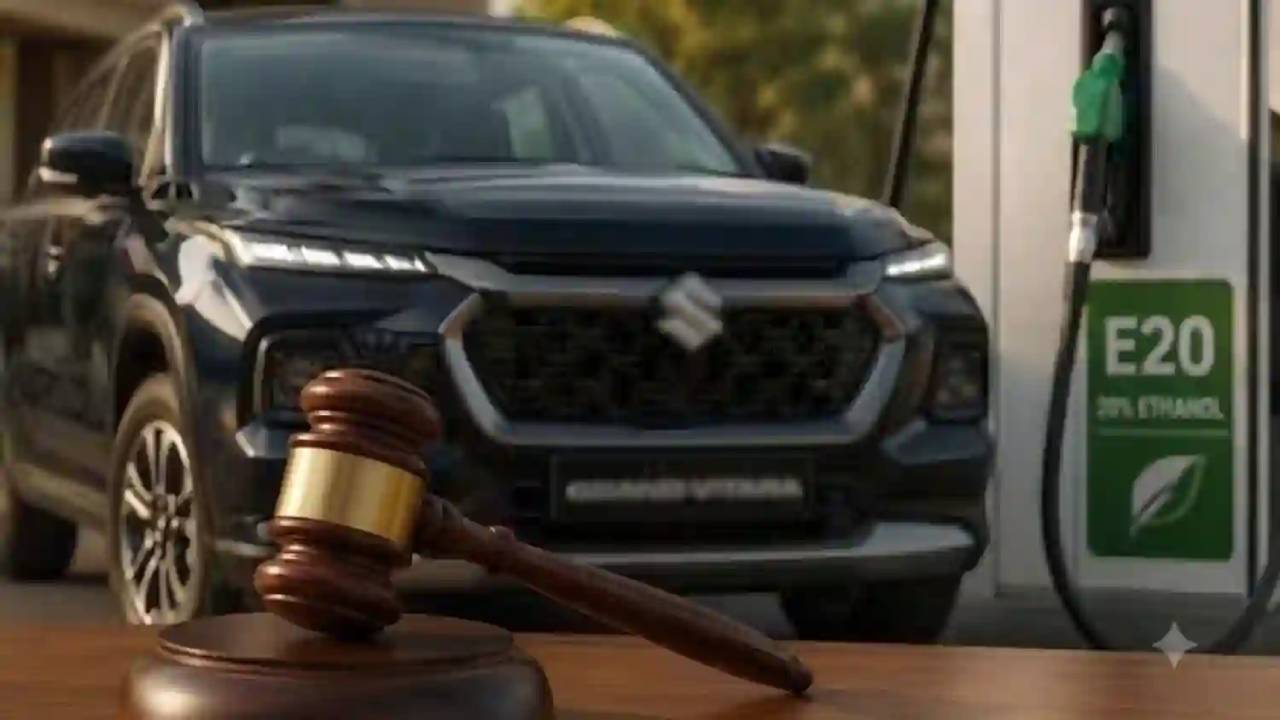
Maruti Suzuki E20 Fuel Row

An order by the consumer commission in Raipur has placed Maruti Suzuki in the limelight. As the latest player in the much-anticipated case on compatibility of E20 fuel in India. The District Consumer Disputes Redressal Commission has asked the automobile giant to replace its customer's vehicle. With another E20 compatible model else face a penalty of refund and compensation.
Statement by the consumer commission
The case concerns a 2023 Grand Vitara Strong Hybrid model. As per the allegation, the car has been stalling frequently following fueling with E20 petrol. It is claimed that the customer had to keep changing fuel multiple times, clean the fuel tank and attend the service center several times.
According to the commission, the car sold to the complainant is not E20 compatible. The case has been treated as a deficiency in service as well as an unfair trade practice.
Failure to replace the vehicle within 45 days will lead to a penalty of around ₹20.5 lakh from Maruti Suzuki. The order also entails compensation amount of ₹1 lakh for mental harassment and litigation expenses of ₹10,000.
Also Read: Kia Syros EV Unveiled in India: Claims Range of 526 km!
Response from Maruti Suzuki
According to Maruti Suzuki, the company intends to contest the ruling in the relevant higher court. According to the company's statement, the car in question is E20 compatible and that is clear from the owner’s manual.
Maruti Suzuki also indicated that there were some signs of contamination in the fuel sampled from the customer's car. The company further indicated that several relevant issues were not considered by the commission in the ruling.
According to Maruti Suzuki, the company continues to be committed to quality, safety and customer satisfaction through robust engineering, processes and systems.
Relevance of the case
This case is attracting attention because it has come at a very critical juncture for India's ethanol blending program. As more fuel stations start providing E20 to their customers, questions about whether or not older vehicles can use E20 are becoming frequent.
Earlier, Rahul Bharti, senior executive officer for corporate affairs at Maruti Suzuki had come out in defense of his company's stand on E20. He had stated that all cars that were built to run on E10 had been tested on E20 with no "areas of concern".
Bharti had gone on to add that more than 1.5 crore Maruti cars built before three years have been serviced during FY26 without any reports of corrosion and wear and tear caused by E20.
Mileage and practical experience
According to Bharti, due to the reduced calorific value of E20, there is merely a 3% to 3.5% reduction in mileage. He further emphasized that elements such as tyre pressure, driving style, gear changes, braking, and maintenance have a far greater influence on the mileage.
- Better acceleration.
- Anti-Knock Property.
- Reduction in emissions.
- He further explained that Maruti does not provide retro-fit kits for older vehicles.
ELCTRIK Speaks
The present case highlights the significance of making fuel compatibility clear at the point of purchase. Though there is compliance with regard to vehicle specifications, there should be no confusion on the customer's side in case of any practical issues. It can be disputed, however, that the order is already posing a critical question concerning consumer trust. Automakers will have to improve disclosure practices and address complaints faster. Transparency may prove just as crucial as engineering.