
Volkswagen Mission Efficiency EV Completes 1,278 km Test Drive on Single Charge
Volkswagen has unveiled the Mission Efficiency, a near-production electric vehicle prototype focused on reducing energy consumption through aerodynamics, low rolling resistance, lightweight construction and solar power. The vehicle recorded a drag coefficient of 0.158 and consumption of 6.89 kWh/100 km without charging losses.
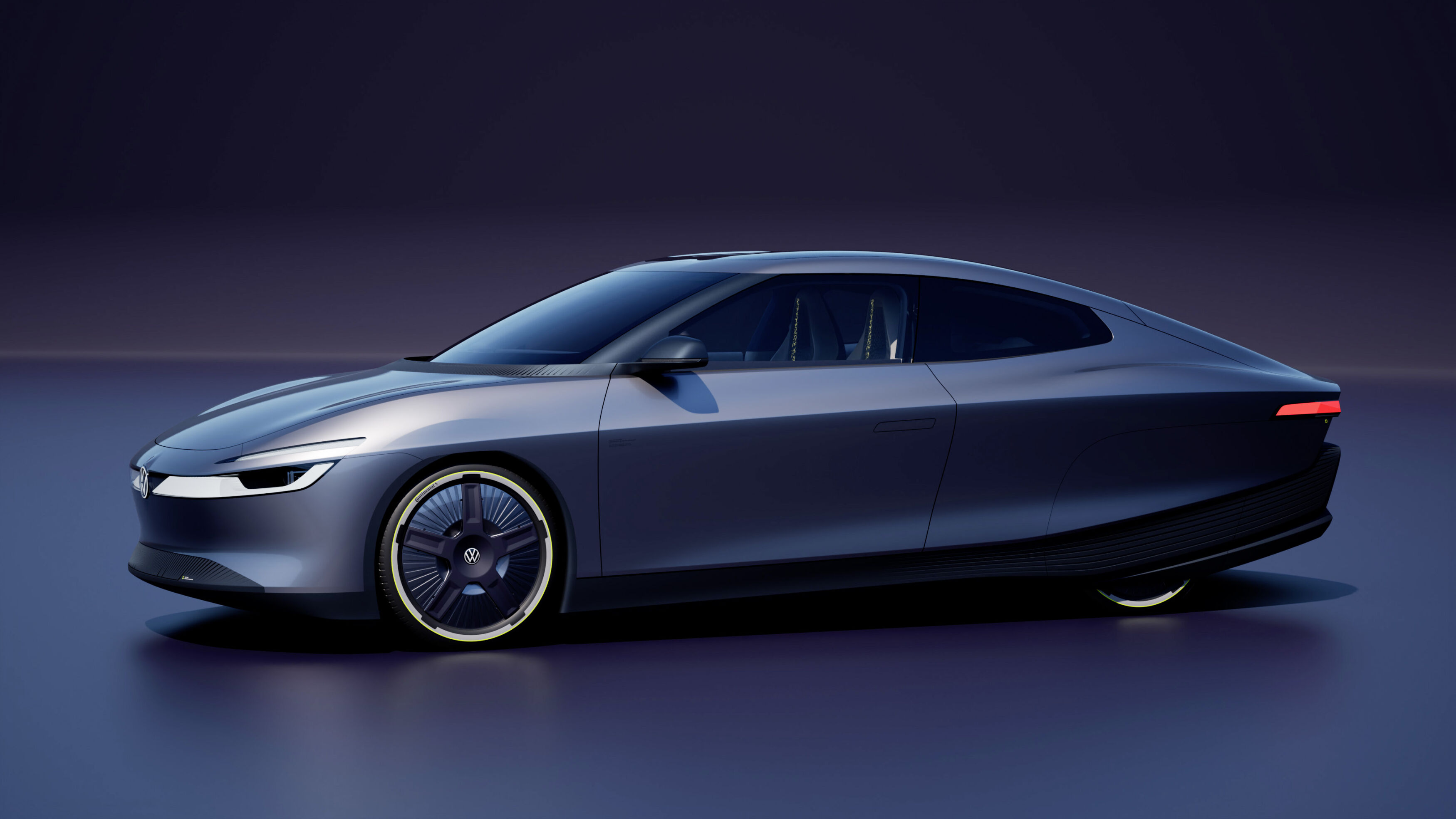
Volkswagen Mission Efficiency EV
Volkswagen has presented the Mission Efficiency, a near-production electric vehicle prototype that the company says has set three records related to aerodynamics and energy consumption.
The vehicle has a drag coefficient (Cd) of 0.158, which Volkswagen says is the lowest recorded for a road-approved car. It also recorded energy consumption of 6.48 kWh/100 km during an ideal test run at a constant speed of 68 km/h, with no gradients and selected auxiliary systems switched off.
In a separate road test, the vehicle covered 1,278.36 km from Volkswagen's development centre in Wolfsburg, Germany, to Vienna via Poznań in Poland and Olomouc in the Czech Republic. The test was conducted at an average speed of 67.72 km/h, with a top speed of 138 km/h.
The vehicle recorded consumption of 7.51 kWh/100 km when charging losses were included and 6.89 kWh/100 km without them. Volkswagen said the 54.9 kWh net battery was charged once during the journey. The vehicle had a remaining range of 164 km on reaching Vienna.

Based on MEB+ production technology
The Mission Efficiency uses Volkswagen's MEB+ electric vehicle architecture and front-wheel drive. Its electric motor produces 99 kW (135 PS) and is also used in the ID. Polo.
Volkswagen said the prototype uses production-related components rather than a dedicated high-performance electric drivetrain. The same front-wheel-drive system is planned for models such as the ID. Polo and ID. Cross.
Thomas Schäfer, CEO of the Volkswagen brand and head of the Brand Group Core, said the prototype was developed to examine how much efficiency can be gained using technologies that can also be applied to volume-production vehicles.
Aerodynamics and vehicle design
Aerodynamics is a major part of the Mission Efficiency's design. The vehicle has a frontal area of 2.08 sq m and uses a teardrop-shaped body. Other aerodynamic features include active cooling air flaps, covered rear wheels, a covered underbody, frameless windows and integrated door handles.
Volkswagen said the aerodynamic changes have a greater effect as vehicle speed increases. Above 80 km/h, the Mission Efficiency uses more than 30% less energy than the standard ID. Polo. At 140 km/h, its energy requirement is similar to that of the ID. Polo travelling at 100 km/h.
The design also draws on the Volkswagen XL1, which was introduced in 2013 with a plug-in hybrid powertrain and focused on reducing fuel consumption. The Mission Efficiency measures 4,775 mm in length and 1,392 mm in height. It has a 2+2 seating layout and 481 litres of luggage capacity. The rear seats are designed for passengers up to around 1.60 metres tall. The body combines components from the ID. Polo with an aluminium structure and parts made from carbon-fibre-reinforced polymer and aramid composite materials.
Wheel and tyre changes
Volkswagen has also focused on reducing aerodynamic and rolling resistance around the wheels. The company estimates that wheels account for around 25-30% of a vehicle's aerodynamic resistance. The front wheel arches have therefore been designed to closely follow the tyre shape.
The prototype also uses patented rim deflectors on the inside of the wheels. These are designed to reduce the amount of air entering the rims and creating turbulence. Flat hubcaps are used on the outside of the wheels to further reduce airflow disruption.
Volkswagen worked with Continental on a tyre based on the EcoContact 7 series. The prototype tyre has a rolling resistance of 4.9 kg per tonne, with changes to the sidewall and tread compound intended to reduce energy losses while driving.
Rear electromechanical braking system
The Mission Efficiency uses a MacPherson front suspension and hydraulic front brakes derived from the ID. Polo. At the rear, Volkswagen has fitted an electromechanical brake system developed with AUMOVIO. The system eliminates some hydraulic components and reduces friction losses.
Volkswagen said the system also allows changes to brake-force distribution and can support energy recuperation during deceleration. The prototype has received EU road approval and meets the applicable safety, strength and crash requirements, according to Volkswagen.
Solar roof and lower cabin weight
A 370 W photovoltaic system is integrated into the glass roof and boot lid. The system supplies electricity to the vehicle's onboard electrical systems. Volkswagen estimates that the solar system can add up to 30 km of range per day under suitable seasonal, regional and weather conditions.
Inside the vehicle, weight has been reduced by using lighter panels and removing some conventional equipment. A portable Bluetooth speaker replaces the standard speaker system, while the vehicle uses a "bring your own device" approach instead of a conventional infotainment display.
Elctrik Speaks
The Mission Efficiency highlights the role of factors beyond battery capacity in improving EV efficiency. Aerodynamics, tyre rolling resistance, vehicle weight, braking losses and auxiliary electrical loads can all affect how much energy an electric vehicle requires.
The prototype also indicates where efficiency improvements could be incorporated into future mass-market EVs. Its use of the MEB+ platform, the front-wheel-drive system from the ID. Polo and other production-related components suggests that Volkswagen is using the vehicle as a development programme to evaluate technologies that could eventually move into series-production models.
For EV manufacturers, improving efficiency can reduce the amount of battery capacity required for a given range or increase range without increasing battery size. This can have implications for vehicle weight, charging requirements and battery costs.