
Toyota Files Patent for Hydrogen Fuel Cell Scooter with Swappable Canister System
Toyota has filed a patent for a hydrogen-powered scooter that uses replaceable fuel canisters, indicating ongoing exploration of hydrogen mobility beyond passenger vehicles.
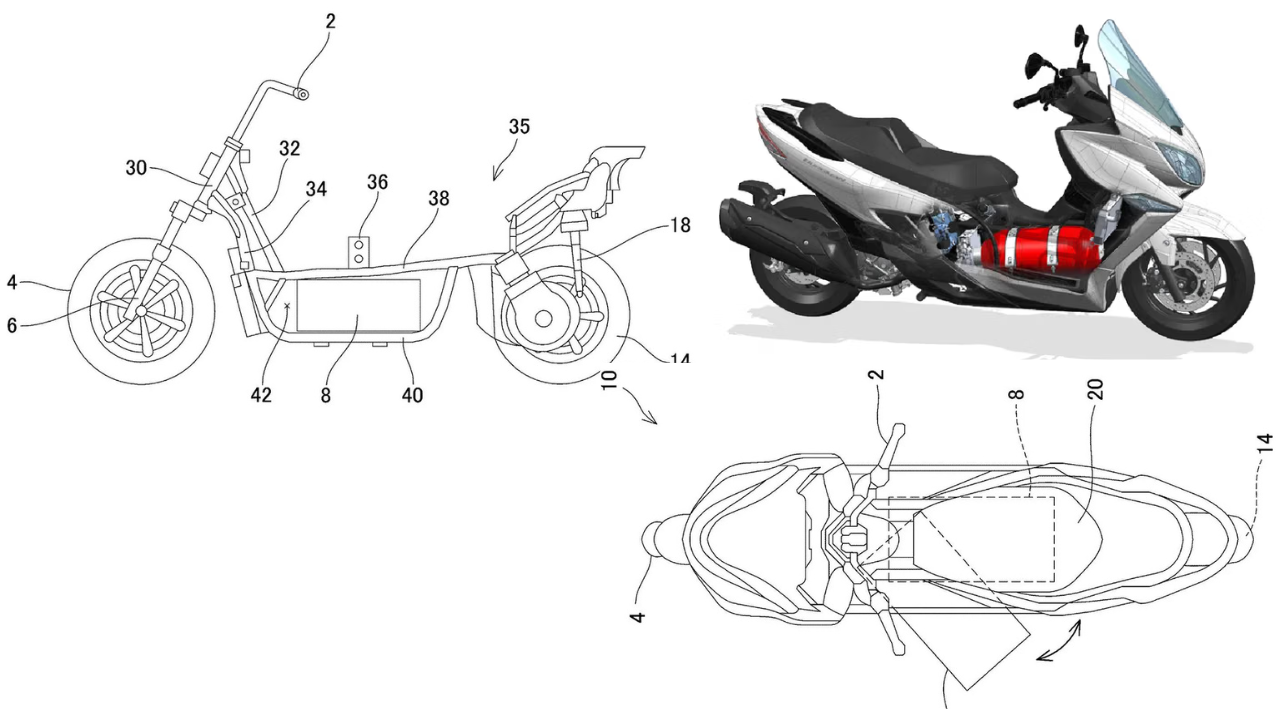
Toyota Motor Corporation has filed a patent for a hydrogen-powered scooter, as reported by Australian Motorcycle News. The development highlights the company’s continued interest in hydrogen as part of a wider mobility ecosystem.
The patent outlines a two-wheeler powered by a hydrogen fuel cell system, where electricity is generated through a reaction between hydrogen and oxygen, producing water as the only byproduct.
Replaceable Hydrogen Canisters Instead of Refuelling
A key aspect of the patent is the use of detachable, pre-filled hydrogen canisters. Instead of refuelling at a high-pressure station, users would remove an empty canister and replace it with a full one. This approach is intended to simplify the refuelling process and reduce handling complexity associated with compressed hydrogen. The system also aims to maintain fuel purity, which is important for fuel cell performance.
Also read: India EV Sales April 2026: Top 10 Electric Passenger Vehicle Brands
Design Addresses Accessibility Challenges
The patent highlights challenges related to the placement of hydrogen tanks in scooters. Typically, tanks are positioned low within the chassis to improve balance, but this makes access difficult.
Toyota proposes two mechanical solutions:
- A hinged cradle that allows the canister to swing outward
- A scissor-type mechanism that shifts the canister sideways while keeping it aligned
Both approaches are designed to make removal and replacement easier for users.
Link to Existing Hydrogen Two-Wheeler Prototypes
The scooter design referenced in the patent resembles earlier prototypes developed by Suzuki Motor Corporation, particularly hydrogen-powered versions of the Burgman showcased over the years. Both companies are also part of the Hydrogen Small Engine Consortium, which focuses on developing hydrogen-based solutions for small vehicles, including motorcycles.
Fuel Cell vs Combustion Approach
The patent specifies the use of a fuel cell system rather than hydrogen combustion. Fuel cells generate electricity directly and do not produce combustion-related emissions such as nitrogen oxides. However, fuel cells require high-quality hydrogen to function reliably, which aligns with the use of sealed, replaceable canisters.
Early-Stage Development with No Launch Timeline
The patent does not indicate any production timeline. While it reflects ongoing research into hydrogen mobility, there is no confirmation of a commercial two-wheeler launch based on this concept.
Elctrik Speaks
Toyota’s patent highlights continued exploration of hydrogen across vehicle segments, including two-wheelers. The use of swappable canisters suggests an alternative to conventional refuelling infrastructure, but practical deployment will depend on ecosystem readiness and cost viability.