
The Rise of Connected Mobility: Why Consumers Are Demanding Smarter, Safer, and More Personalized Vehicles
Walk into any car dealership in India today and pay attention to what buyers actually ask about. Not engine displacement. Not ground clearance...
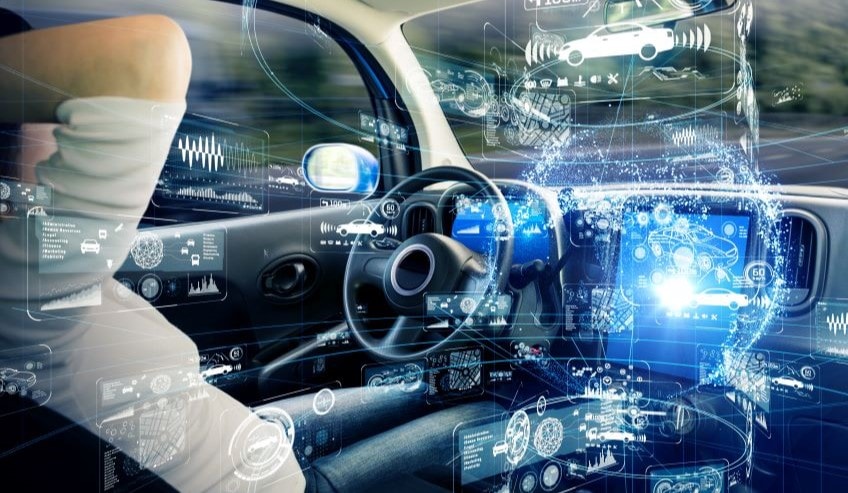
Rise of Connected Mobility

Authored By: Pavan Puri, Founder & Managing Director, Greencore Electronics
Walk into any car dealership in India today and pay attention to what buyers actually ask about. Not engine displacement. Not ground clearance, though that still matters. What people want to know is whether the touchscreen supports wireless CarPlay, whether the ADAS suite covers blind-spot detection, and whether the car can receive software updates the way their phone does. This is not a niche premium-segment conversation anymore. It is happening at every price point, in every geography, and it tells you something important about where the Indian automotive market has arrived.
The connected car is no longer a concept car. It is the product on the showroom floor. According to Mordor Intelligence, the Indian connected car market stood at USD 150 million in 2025 and is on track to reach USD 551.62 million, compounding at over 25% annually. The automotive infotainment segment alone, valued at USD 665.2 million in 2025, is expected to cross USD 1,850 million by 2034, according to IMARC Group, driven by AI voice systems, real-time navigation, and the rapid spread of over-the-air update capability. These are not speculative projections built on optimistic assumptions. They are being pulled forward by consumers who have already made up their minds about what they want.
Safety Has Become a Selling Point, Not a Checkbox
For most of India's automotive history, safety features arrived via regulation. The government mandated airbags, ABS followed, and the industry complied. What is different now is that consumers are demanding safety features before any regulator requires them. According to industry insights, roughly 78% of Indian car buyers now place safety features at the top of their purchase criteria, a figure that would have been unthinkable a decade ago. The influence of Bharat NCAP ratings has been significant here. Buyers are researching crash test scores the way they once studied fuel economy numbers.
ADAS adoption is the clearest evidence of this trend. Lane departure warnings, automatic emergency braking, 360-degree camera systems, and ultrasonic parking sensors have steadily migrated from flagship trims into mid-range vehicles, and demand for safety and automation features has risen 40% across new vehicle categories as a result. What is equally compelling is the pressure these developments put on the supply chain. OEMs do not just want to fit ADAS technology into their vehicles. They want it localised, cost-effective, and validated for Indian conditions, which are, frankly, unlike anything the Western engineers who designed most of these systems ever anticipated.
India's roads are a genuinely high-entropy environment. Two-wheelers weave between lanes that may not exist. Cattle cross highways. Monsoon rains coat camera lenses and degrade radar performance. Lane markings vanish. Speed bumps appear without warning. None of these factors are accounted for in the default calibration of sensor systems developed for German autobahns or American motorways. The real frontier for ADAS in India is not the hardware. It is the AI perception layer, the training data, and the local engineering judgement needed to make these systems behave sensibly in the chaos of an average Indian commute. That gap is an opportunity for domestic manufacturers who are willing to invest in it seriously.
Connectivity Has Moved from Feature to Expectation
Meanwhile, the infotainment and connectivity story has taken on a momentum of its own. McKinsey data shows that around 70% of Indian consumers now treat smartphone integration, Bluetooth, and in-car Wi-Fi as non-negotiable rather than optional, while over 60% actively seek AI-powered voice assistants and personalised media experiences in the vehicles they are considering buying.
The infrastructure underpinning the platform is maturing quickly. Embedded eSIM modules now ship in over 46% of new connected vehicles in India, giving OEMs persistent control over diagnostics, firmware, and data. Over-the-air software update capability, which lets manufacturers push new features and security patches directly to vehicles in the field, is projected to grow at a CAGR of over 26% through 2031. The implications of that trajectory are worth sitting with for a moment. It means the vehicle you sell today is not the finished product. It is a platform that keeps evolving, and the electronics architecture has to be built to support that from day one.
Telematics adds yet another dimension. Fatigue detection, driver behaviour scoring, predictive maintenance, and real-time fleet analytics are no longer aspirational back-office capabilities for large logistics companies. They are being demanded by insurers, commercial fleet operators, and even individual consumers who want visibility into how their vehicles are performing and how safely they are being driven. The connected vehicle has quietly become an intelligence platform, and the demand for that intelligence is only going in one direction.
The Supply Chain Must Rise to Meet the Moment
India's automotive electronics manufacturers are sitting at an inflection point that does not come around often. Consumer demand is real, growing, and strongly influencing product roadmaps. Regulatory tailwinds from AIS-140 mandates, Bharat NCAP 2.0, and connected service requirements are adding structural support. And the competitive pressure from global OEMs who are now actively evaluating Indian manufacturing bases means the expectation bar for local suppliers has risen sharply.
What the market needs from the supply chain is not just volume. It needs depth: sensor fusion expertise, cybersecurity-hardened telematics architectures, human-machine interfaces designed around how Indian drivers actually interact with technology, and the kind of rigorous validation that OEM-grade supply demands. A Deloitte survey points out that around 70% of Indian consumers already worry about data privacy in connected vehicles, which signals clearly that trust will be a competitive variable in this market, not a background concern. The companies that treat cybersecurity and data integrity as engineering priorities rather than marketing language will have a durable advantage.
The vehicle of the near future, regardless of powertrain, will carry more electronics content per unit than any vehicle generation before it. The question for India's industry is whether we build that content here, with genuine engineering conviction, or whether we assemble it from imported sub-systems and call it "local." The consumer has already decided what they want. The supply chain now has to decide what kind of industry it wants to be.
(Disclaimer: The views and opinions expressed in this article are solely those of Pavan Puri, Founder & Managing Director, Greencore Electronics and do not necessarily reflect the official stance of Elctrik. The publication is intended for informational and discussion purposes only.)