
RBI Governor Signals Possible Fuel Price Hike if Global Oil Prices Stay High
RBI Governor Sanjay Malhotra has indicated that retail fuel prices in India could increase if global crude oil prices continue to remain high due to the ongoing West Asia conflict. The government and oil companies have so far absorbed the impact, but officials suggest prolonged pressure may lead to higher prices for consumers.
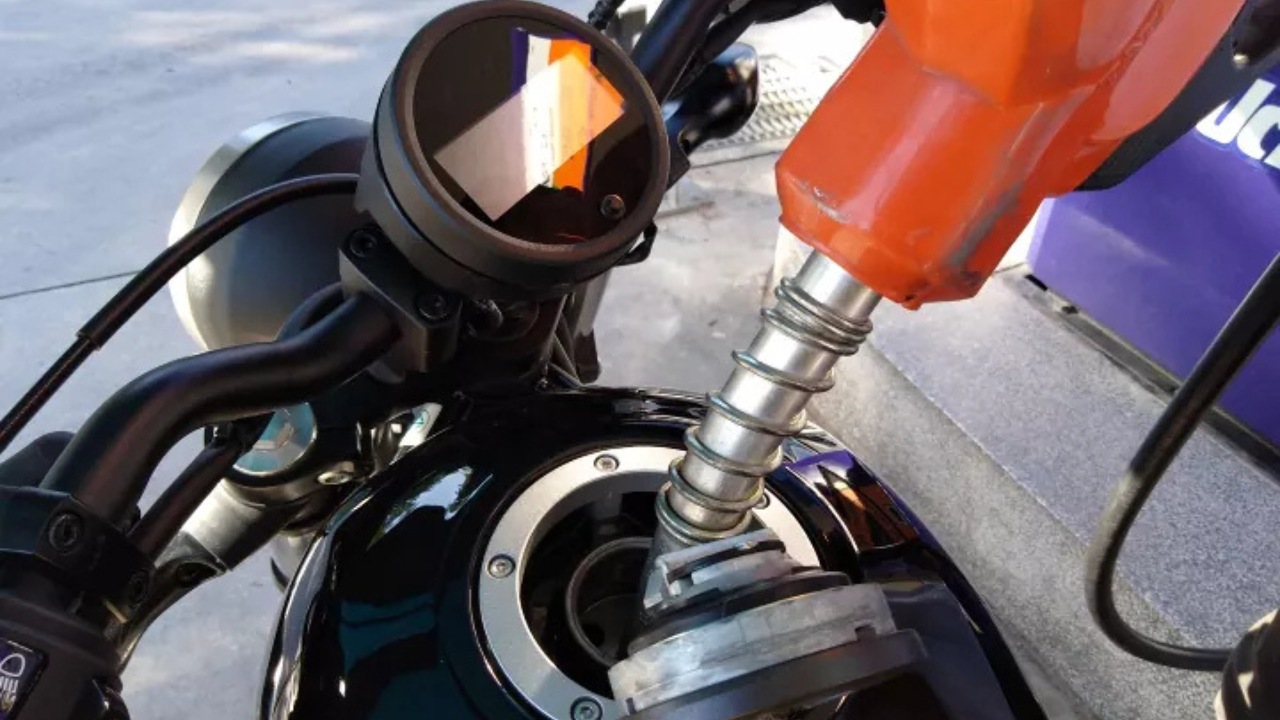
According to a report by Bloomberg, Reserve Bank of India Governor Sanjay Malhotra has said that an increase in petrol and diesel prices may become unavoidable if crude oil prices remain elevated for a longer period due to tensions in West Asia.
Speaking at the 12th High-Level Conference on the International Monetary System organised by the International Monetary Fund and the Swiss National Bank, Malhotra said the Indian government has so far shielded consumers from higher global oil prices. Petrol and diesel prices at retail outlets have remained largely unchanged despite a sharp increase in international crude prices.
Also read: Honda To Launch India-Focused Cars Under 4 Metres And Mid-Size Segment From 2028
He said the government had reduced duties and limited increases in certain regulated fuel prices, including gas. However, he noted that such measures may not continue indefinitely if the situation persists. According to Malhotra, “If this is to continue for a longer period of time, it is just a matter of time before the government will pass on some of the price increases.”
Oil Companies Facing Financial Pressure
The RBI Governor’s comments came a day after Union Petroleum Minister Hardeep Singh Puri also indicated that a prolonged crisis in West Asia could force fuel price revisions in India.
Puri stated that oil marketing companies are currently absorbing losses while keeping petrol, diesel and LPG prices unchanged. Reports indicate that oil companies may be facing losses of nearly Rs 1,000 crore per day under the current pricing structure.
The minister also said that fuel supplies in the country remain stable. LPG production has reportedly increased to around 55,000–56,000 tonnes per day from nearly 35,000 tonnes earlier to maintain supply levels. India currently holds crude oil reserves equivalent to nearly 76 days of demand.
Strait of Hormuz Disruptions Impact India
The ongoing tensions around the Strait of Hormuz have disrupted global energy supply routes and pushed up crude oil prices. The situation has increased India’s import costs and added pressure on inflation, the rupee and the overall economy.
Sanjay Malhotra highlighted India’s dependence on the Middle East region, noting that around one-sixth of India’s imports and exports are linked to the region. He also said that nearly 40 per cent of India’s remittances and fertiliser imports, along with close to 60 per cent of gas supplies, are connected to West Asia.
Inflation and Monetary Policy Outlook
India’s consumer price index (CPI) inflation rose to 3.48 per cent in April 2026, compared to 3.4 per cent in March, indicating early signs of price pressure linked to rising global energy costs.
The RBI’s Monetary Policy Committee had earlier decided to keep the repo rate unchanged at 5.25 per cent during its April 2026 policy meeting while maintaining a neutral stance.
Malhotra said the central bank would monitor whether the current inflationary pressure remains temporary or becomes long-term. He added that fiscal coordination between the government and the RBI becomes important during large supply-side shocks. The RBI’s next monetary policy meeting is scheduled for June 5, 2026.
Government Takes Additional Measures
The government has also increased import duties on gold, silver and platinum to support the rupee and reduce pressure on the current account deficit.
Import duty on gold and silver has been raised from 6 per cent to 15 per cent, while platinum duty has increased from 6.4 per cent to 15.4 per cent with effect from May 13, 2026.
Prime Minister Narendra Modi has also urged citizens to reduce petrol and diesel consumption, postpone gold purchases and avoid unnecessary foreign travel to help preserve foreign exchange reserves.