
Mahindra Thar OG Launched in India At Rs 10.32 Lakh: New Platform, More Power And Added Safety
Mahindra has launched the updated Thar OG at Rs 10.32 lakh. The 3-door SUV gets a new platform, revised suspension, electric power steering, updated engines and additional safety equipment.
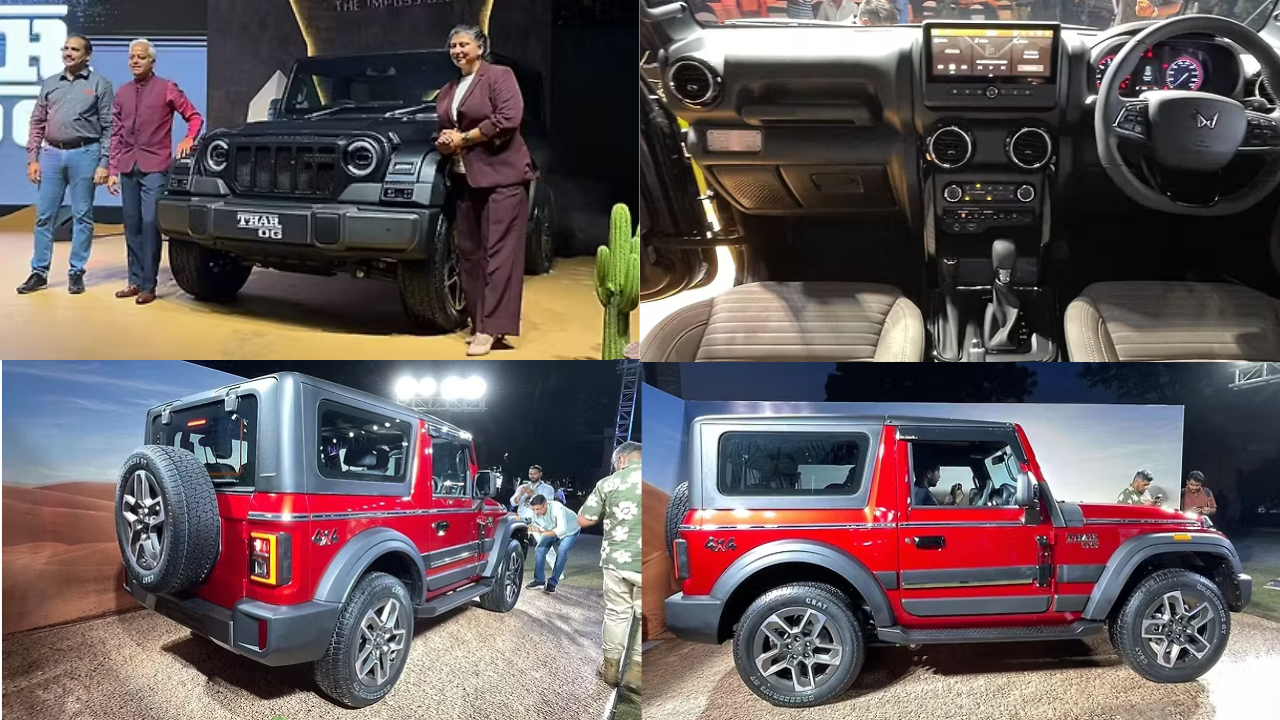
Mahindra Thar OG Launched in India
Mahindra has launched the Thar OG in India at a starting price of Rs 10.32 lakh (ex-showroom). The updated 3-door SUV was introduced on 22 September 2026 and gets changes to its platform, suspension, steering, engines, safety equipment and exterior design.
The Thar OG continues to be available with petrol and diesel engines, along with manual and automatic transmission options. It is positioned against SUVs such as the Force Gurkha and Maruti Suzuki Jimny.
Also read: CEER EXOBOT Electric Sedan and SUV Revealed With Up to 1,111 HP
Mahindra Thar OG: Exterior Changes
The Thar OG gets a revised front-end design with a new grille carrying Thar branding. It also features new LED headlamps with C-shaped daytime running lights and LED fog lamps with a cornering function.
The front and rear bumpers have been redesigned, while the SUV gets a wider track than the previous model. Other changes include new 19-inch alloy wheels, revised LED tail-lamps and OG badging on the tailgate. Two new exterior colours, Artemis Silver and Jeans Blue, have also been added to the range.
Mahindra Thar OG: Interior And Features
The overall dashboard layout remains similar to the previous model, but the cabin gets some equipment changes. The Thar OG is available with Truffle Brown leatherette upholstery and gets a second-row armrest with integrated cupholders. Mahindra has also made changes aimed at reducing noise, vibration and harshness levels inside the cabin.
Mahindra Thar OG: Safety Features
The updated Thar 3-door is now available with six airbags on select variants. Mahindra has also introduced a four-airbag configuration it refers to as the Head Pelvis Thorax Shoulder (HPTS) system for side-impact protection.
The SUV now gets disc brakes on all four wheels. Electronic Stability Program (ESP) is standard across the range and includes functions such as roll-over mitigation, traction control, hill-hold control and vehicle dynamics control. Higher variants also get front parking sensors.
Mahindra Thar OG: Platform And Suspension
The Thar OG moves to Mahindra's M_Glyde 4G platform, which is also used by the Thar Roxx. According to Mahindra, the new platform has increased structural stiffness compared with the previous model.
The rear suspension has also been revised. The Thar OG gets a Pentalink setup with a Watts Link, replacing the previous arrangement. The system is designed to control lateral movement of the rear axle.
The SUV also gets Frequency Dependent Damping (FDD), which Mahindra calls DAVINCI dampers. The technology changes damping characteristics according to the type of road input.
Mahindra Thar OG: Off-Road Features
The Thar OG replaces the hydraulic steering system with electric power steering (EPS). This changes the steering assistance at low speeds and is intended to reduce the effort required during parking and manoeuvring.
The SUV also gets an Electronic Locking Differential (ELD). The system can lock the rear axle to direct torque towards the wheel with greater traction. The updated Thar also gets dedicated Mud, Sand and Snow terrain modes.
Mahindra Thar OG: Engine And Transmission Options
The Thar OG continues with three engine options.
- The 2.0-litre turbo-petrol engine now produces 162hp and 330Nm, up from 152hp and 300Nm in the previous model.
- The 2.2-litre diesel engine produces 152hp and 330Nm, compared with 134hp and 300Nm earlier.
- The 1.5-litre diesel engine continues to produce 117hp and 300Nm and has not received an output increase.
Transmission options include a 6-speed manual and a 6-speed torque-converter automatic. Depending on the variant, the Thar OG is available with either rear-wheel drive or four-wheel drive.
Mahindra Thar OG Detailed Pricing

Elctrik Speaks
The Thar OG retains the basic 3-door format of the previous model but receives changes to its platform, suspension, steering, powertrain outputs and safety equipment. The introduction of electric power steering, four-wheel disc brakes and an electronic locking differential also changes the mechanical specification of the SUV compared with the outgoing version.