
India’s Mobility Revolution Has a Missing Link: The Need for Digital Legal Infrastructure
India's growing mobility ecosystem requires digital legal infrastructure to help drivers and fleet operators navigate challans, accident-related disputes and compliance issues. The article examines how Roadside Legal Assistance (RSLA) can bridge this gap by connecting roadside support with accessible legal guidance.
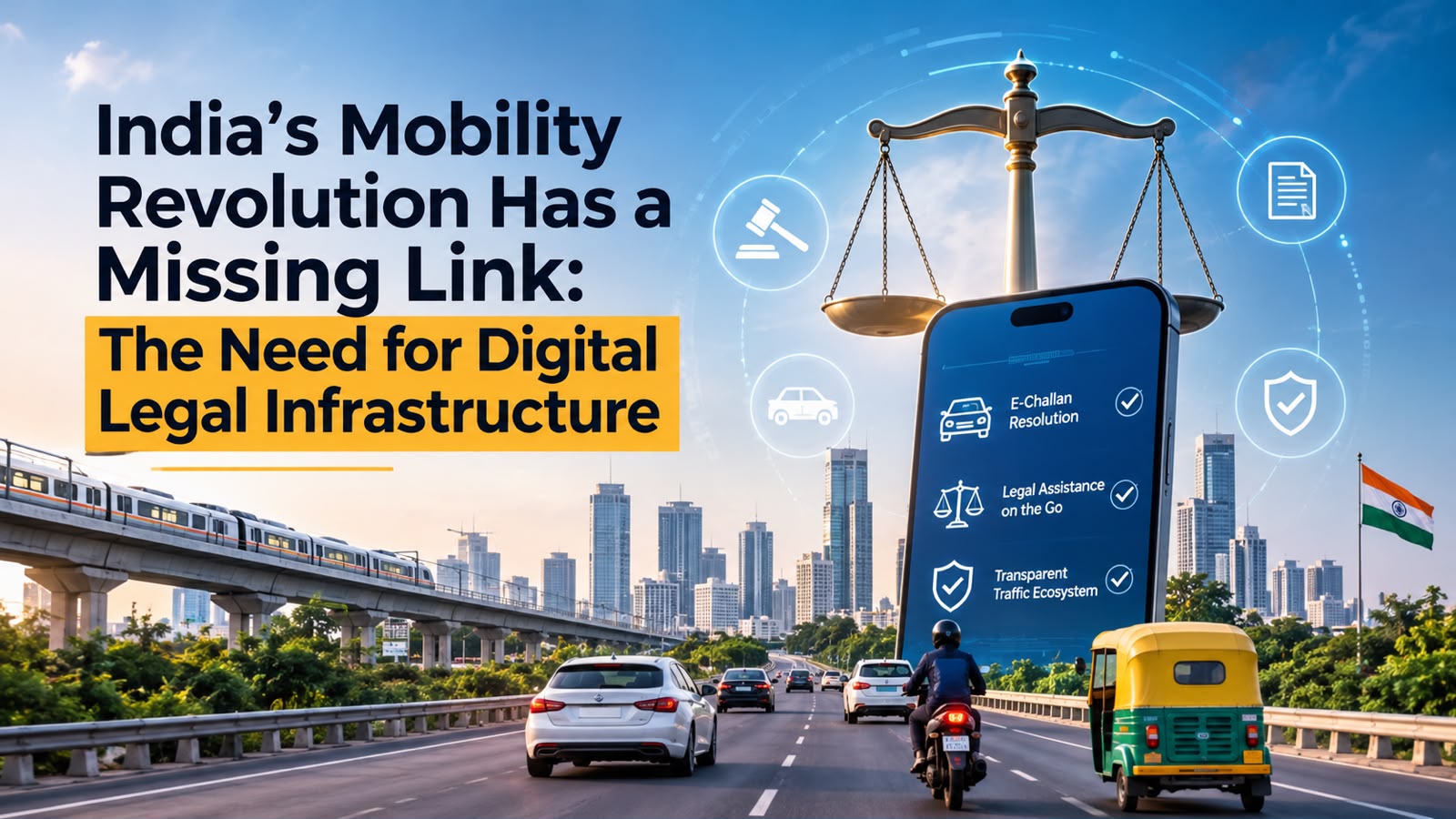
India’s Mobility Revolution Has a Missing Link: The Need for Digital Legal Infrastructure
Authored by: Himanshu Gupta, Founder & CEO, Lawyered
India’s mobility ecosystem is operating at a scale few service systems can ignore. As of March 31, 2025, the country had 391.07 million registered vehicles. In 2025, it recorded 513,474 road accidents, averaging around 42,800 a month or 1,407 a day. By June 2025, the government’s eTransport platform had recorded more than 35 crore challans. Together, these numbers reflect a mobility ecosystem that is vast, increasingly digitised and continuously generating interactions with legal implications.
Also read: Ather Partners with PMC to Improve Potholes and Infrastructure!
India has built important digital systems for vehicle registration, driving licences and traffic enforcement. The next opportunity is to make the legal support surrounding mobility equally accessible. When a driver encounters a challan, an accident-related dispute or a roadside interaction with authorities, the relevant information and services may already exist, but knowing where to find them and what steps to take can remain challenging.
That is the missing link: digital legal infrastructure that connects mobility-related legal needs with clear information, appropriate guidance and access to legal support.
Strengthening the Legal Support Framework for India's Mobility Ecosystem
The scale of India's vehicle base is only one part of the picture. NITI Aayog's VAHAN-based analysis shows that 91.1% of registered vehicles were personal vehicles and 8.9% were commercial vehicles as of March 31, 2025. Their requirements differ: an individual owner may need help understanding a challan, while a fleet operator may have to manage recurring compliance issues across multiple vehicles. Both, however, need reliable ways to identify and address legal issues connected to mobility.
Digital systems have already made vehicle-related records and processes easier to access. The government's eTransport programme reported 40 crore-plus vehicle registrations, 35 crore-plus challans issued, 36 crore-plus pollution-under-control certificates and 22 crore-plus driving licences by June 30, 2025. These are cumulative programme figures, rather than counts of unique active users, but they demonstrate how extensively digital platforms now support mobility administration in India.
However, digitising a record is not the same as helping someone resolve the issue associated with it. A challan may be available online, but a vehicle owner may still need to understand the available options, decide whether to pay or raise a grievance, or seek legal guidance. Similarly, an accident may involve more than vehicle recovery, bringing questions around documentation, insurance claims and legal disputes.
These situations do not mean every driver needs a lawyer. The accident figures are not a measure of demand for legal services, just as challan totals do not represent unique individuals requiring legal representation. They do, however, highlight the scale of mobility-related interactions where accessible and reliable guidance can make a difference.
What digital legal infrastructure should do
Digital legal infrastructure should bridge the gap between identifying a legal issue and taking an informed next step. This means making it easier to:
• Find and understand the issue: Identify a challan, understand compliance requirements or recognise when an incident may involve a legal process.
• Access appropriate guidance: Connect with a helpline or another relevant support channel to understand the available options.
• Find further assistance: Reach suitable legal professionals or on-ground support when the circumstances require it.
• Navigate the process: Understand the next steps, timelines and limitations of the available services.
Such infrastructure should complement public platforms, legal professionals and existing mobility services. The government's e-Challan system, for instance, provides official services for checking and paying challans, as well as grievance redressal and court-disposal processes. Digital legal support can help people navigate these processes, but it should not replace government systems, courts or professional legal judgment.
Equally important is the distinction between making a service accessible and ensuring effective assistance. A website or app may make a service visible, but people also need clear explanations, appropriate guidance and realistic expectations. A legal helpline, for instance, is different from having a lawyer physically present at the location. On-ground support may depend on the nature of the issue, location and availability. A well-designed service must communicate these differences clearly.
RSLA connects the legal layer to the roadside moment
Roadside assistance has traditionally focused on the vehicle, covering services such as towing, on-site repairs, battery support and helping drivers get back on the road. However, mobility-related incidents can also involve legal complications. Roadside Legal Assistance (RSLA) addresses this gap by providing drivers and vehicle owners with a route to legal guidance when they encounter challans, disputes, accident-related procedures or interactions with authorities.
Integrating roadside assistance with RSLA can make the overall support experience more comprehensive. A customer who approaches a roadside assistance provider for help with an incident may also need legal guidance arising from the same situation. The objective is not to turn every vehicle breakdown into a legal matter, but to make appropriate assistance easier to access when such a need arises.
Lawyered's partnership with Across Assist is one example of this approach. Under the partnership, Lawyered's roadside legal assistance is included in Across Assist's roadside assistance plans. The services announced include a 24/7 legal helpline, on-ground legal support where required, assistance with accident-related disputes and compensation claims, and challan discovery and resolution.
Lawyered reports a legal network of more than 80,000 lawyers, with coverage across close to 98% of India's pin codes. While network size and geographical reach indicate the potential for wider access, the effectiveness of such models will ultimately depend on the quality of guidance, availability of assistance and consistency of service delivery.
Building the next layer of India's mobility ecosystem
India's digital mobility infrastructure has made considerable progress across registrations, licences, enforcement and compliance. The scale of 39.1 crore registered vehicles, more than 35 crore challans issued and over 5.13 lakh road accidents in 2025 underlines why the next phase of mobility transformation must look beyond administration and enforcement to the support available to people navigating these systems.
Digital legal infrastructure can help bridge this gap by making legal assistance easier to discover, access and navigate. Integrating RSLA with established roadside assistance models can further strengthen this ecosystem, helping individual drivers, vehicle owners and fleet operators move from uncertainty towards informed action.
Ultimately, the mobility revolution is not complete when a vehicle is registered, a challan is issued or a stranded car is towed. It also depends on whether people can access clear, reliable and appropriate support when legal challenges arise along the way.
(Disclaimer: The views and opinions expressed in this article are solely those of Himanshu Gupta, Founder & CEO, Lawyered and do not necessarily reflect the official stance of Elctrik. The publication is intended for informational and discussion purposes only.)