
India–New Zealand FTA eliminates tariffs on automobiles and auto parts
The India–New Zealand FTA removes tariffs of up to 10% on automobiles and auto components, allowing duty-free entry for Indian automotive exports.
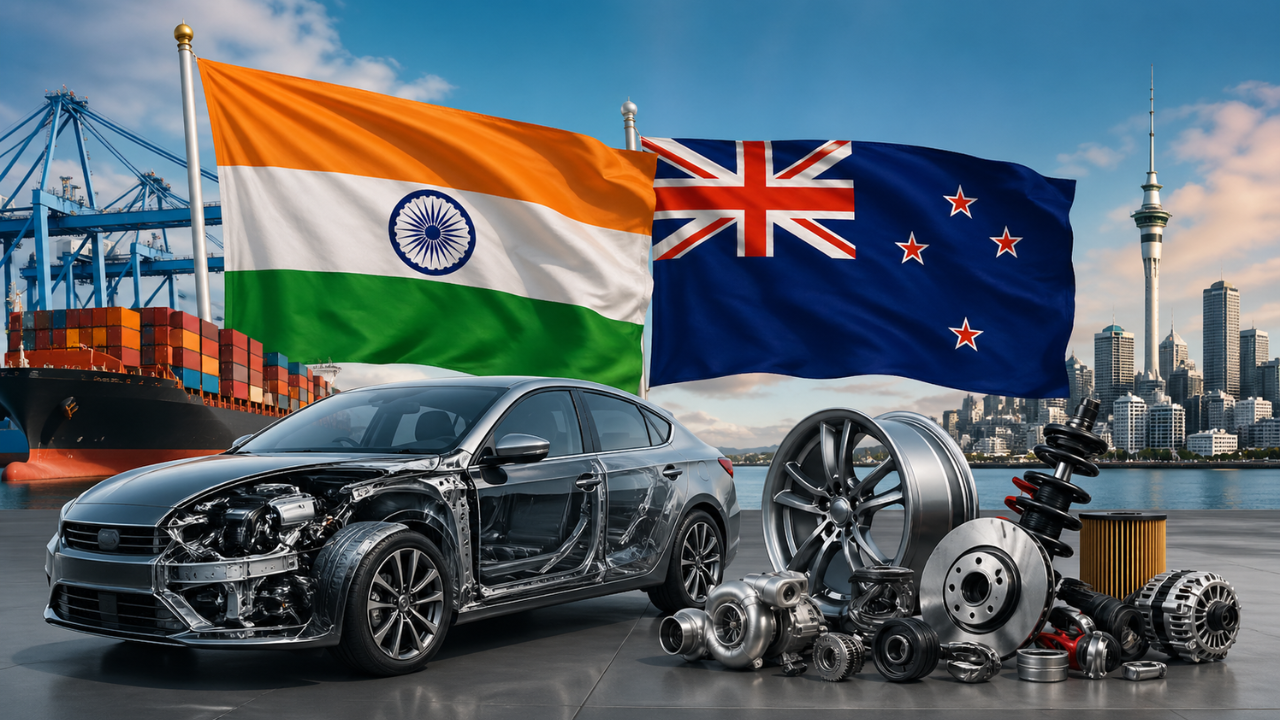
India and New Zealand have signed a free trade agreement that removes tariffs of up to 10% on Indian automobile and auto component exports. The agreement introduces zero-duty access, which may change cost structures and market access conditions for the automotive sector.
Earlier tariff barriers for automotive exports
Before the agreement, New Zealand imposed tariffs of up to 10% on Indian automobile and auto component exports. These duties added to overall costs and affected competitiveness in the New Zealand market.
Zero-duty access for the automotive sector
Under the agreement, New Zealand will provide duty-free access across all tariff lines, including automobiles and auto components. This removes the earlier tariff burden and aligns India with other countries that already have trade agreements with New Zealand.
Manufacturing and supply chain implications
The agreement also allows duty-free import of inputs such as coking coal and metal scrap, which are used in manufacturing processes. This may influence production costs for automotive and component manufacturers.
Trade coverage and phased tariff changes
India has offered tariff liberalisation on around 70% of tariff lines, covering most of the bilateral trade value. Some products will see immediate duty elimination, while others will follow phased reductions over several years.
Broader trade and services linkage
The agreement includes provisions for services such as engineering, construction and professional services, which are linked to the automotive ecosystem. It also introduces mobility pathways for skilled professionals.
Elctrik Speaks
For the automotive sector, the removal of tariffs changes export cost dynamics, but demand in New Zealand remains limited compared to larger markets. The agreement may create opportunities for niche exports, particularly in auto components, where pricing and supply chain efficiency play a key role.