
Government Calls for Industry Collaboration to Build Scalable EV Charging Network Under PM E-DRIVE
The Ministry of Heavy Industries discussed the expansion of EV charging infrastructure under the PM E-DRIVE scheme during a national conference in Bengaluru. The meeting focused on coordination between states, oil companies, charge point operators and vehicle manufacturers to support wider EV adoption across India.
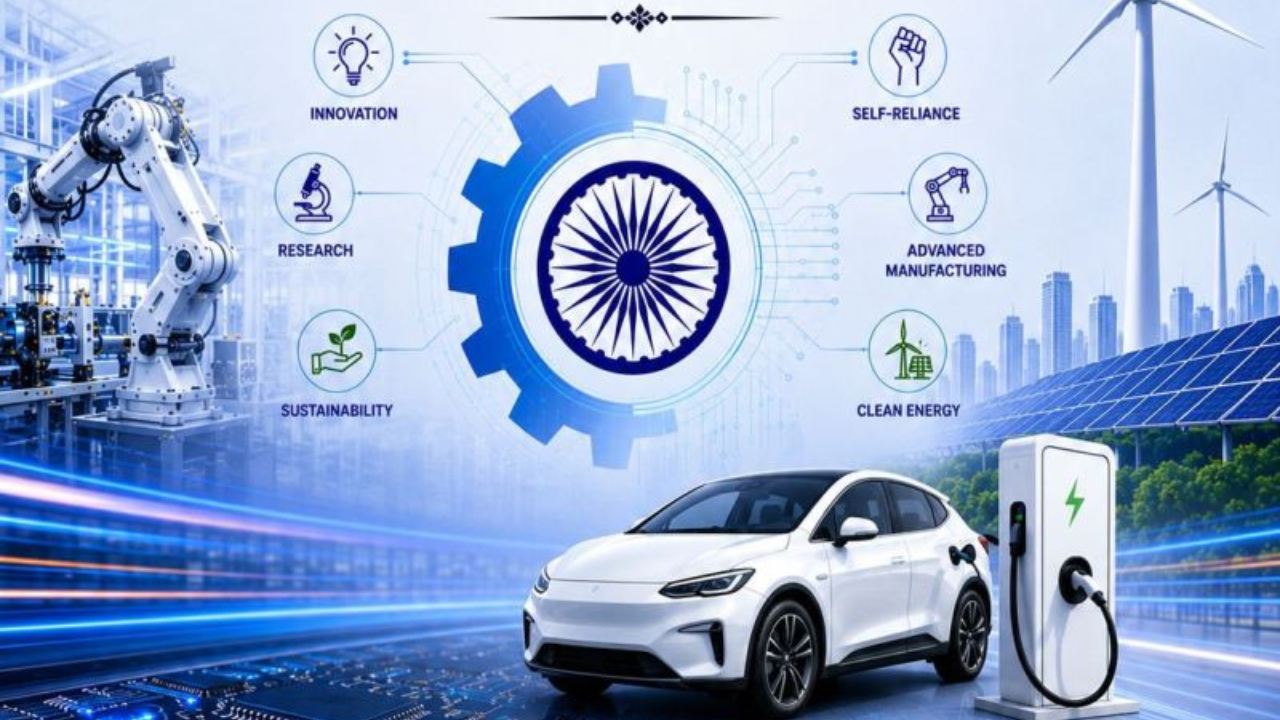
The Ministry of Heavy Industries organised a national conference on “Enabling Nationwide EV Charging Infrastructure under PM E-DRIVE Scheme” in Bengaluru on May 12. The conference brought together representatives from state governments, charge point operators, vehicle manufacturers, oil marketing companies, central public sector enterprises and industry bodies.
During the event, Union Minister for Heavy Industries and Steel H. D. Kumaraswamy said that expanding EV charging infrastructure remains an important part of India’s electric mobility plans. He stated that charging availability across urban and rural regions will play a role in supporting EV adoption.
Also read: Government Approves 4,874 EV Chargers Across States Under PM E-DRIVE Scheme
Charging Infrastructure Approvals Announced
The ministry announced approval for Karnataka’s proposal involving 1,243 EV charging stations with an outlay of Rs 123.26 crore. According to the ministry, proposals worth Rs 503.86 crore have been approved so far for the installation of 4,874 EV chargers across multiple states and CPSEs. The approved proposals include public sector oil companies such as Indian Oil Corporation, Bharat Petroleum Corporation Limited and Hindustan Petroleum Corporation Limited. States covered under the approvals include Rajasthan, Andhra Pradesh, Uttar Pradesh, Gujarat, Kerala, Telangana, Karnataka and Tamil Nadu.
PM E-DRIVE Scheme Outlay and Targets
The PM E-DRIVE scheme has a total outlay of Rs 10,900 crore for EV adoption and related infrastructure development. Under the scheme, the government plans support for around 24.79 lakh electric two-wheelers and 3.16 lakh electric three-wheelers, including e-rickshaws and e-carts. The scheme also includes support worth Rs 4,391 crore for deployment of more than 14,000 electric buses.
An allocation of Rs 2,000 crore has been earmarked for EV public charging infrastructure, while Rs 3,679 crore has been allocated towards demand incentives for various EV categories including electric two-wheelers, three-wheelers, ambulances and trucks.
States Share Deployment Strategies
Officials from Telangana, Kerala, Karnataka and Odisha discussed state-level policies and charging infrastructure deployment strategies during the conference. The discussions focused on improving charging accessibility, faster deployment of public charging stations, interoperability between charging networks and standardisation of systems across states.
Industry Coordination Highlighted
Participants at the conference discussed the role of coordination between central ministries, state governments, charge point operators, vehicle manufacturers and oil marketing companies in developing a larger charging network.
The conference also focused on the need for common technical standards, public-private participation and integration between stakeholders to support future EV demand.
Elctrik Speaks
The expansion of charging infrastructure is becoming a key focus area as EV volumes increase across passenger and commercial vehicle segments. The discussions at the conference indicate that interoperability, deployment speed and coordination between public and private stakeholders are likely to remain central to India’s EV infrastructure plans under the PM E-DRIVE scheme.