
EMO Energy Plans 5,000 Fast EV Chargers for Last-Mile Delivery Network in India
EMO Energy plans to expand its fast-charging network for commercial electric two-wheelers from 1,500 to over 5,000 chargers by the first half of 2027, focusing on fleet operations and last-mile delivery use cases.
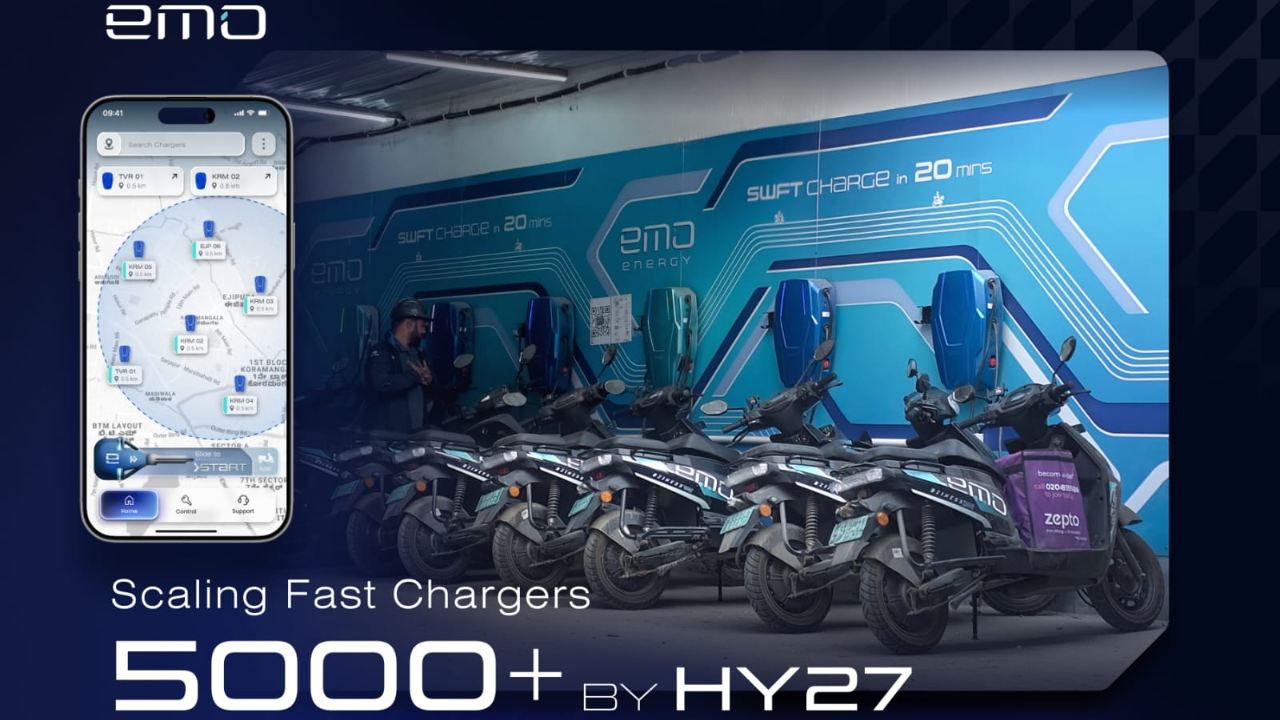
EMO Energy, a company working in battery systems and EV charging infrastructure, has announced plans to scale its fast-charging network to more than 5,000 units by the first half of 2027. The company currently operates over 1,500 chargers designed for commercial electric two-wheelers. The expansion is aimed at supporting the growing use of EVs in last-mile delivery and fleet-based operations.
Focus on Commercial Two-Wheeler Use
The charging network is built to support EMO Energy’s battery system, ZenPac. According to the company, the system allows batteries to reach up to 80% charge in about 20 minutes through multiple short charging sessions across the day. The infrastructure is deployed at locations such as dark stores and high-density delivery routes, where riders can charge vehicles during short breaks between trips.
Also read: Versigent Debuts on NYSE as Independent Company After Separation from Aptiv
Deployment Strategy
Unlike charging networks designed for private vehicle users, EMO Energy’s network is focused on commercial usage patterns. The chargers are placed in areas with frequent delivery movement to reduce downtime for riders. The approach is intended to align with the operational needs of fleet operators, including consistent access to charging and reduced waiting time.
Growing Demand for Fleet Charging
The expansion comes at a time when electric two-wheelers are being increasingly used in sectors such as e-commerce, food delivery, and quick commerce. The availability of charging infrastructure is considered a key factor in improving vehicle utilisation and supporting wider adoption of EVs in commercial applications.
Scale of Operations
With the planned increase to 5,000+ chargers, EMO Energy is looking to expand its presence in the segment of charging infrastructure dedicated to commercial two-wheelers.
Sheetanshu Tyagi, Co-founder, EMO Energy, said, “Commercial EV adoption will only scale when charging becomes as seamless and reliable as refueling. At EMO Energy, we are building infrastructure around the actual needs of last-mile fleets: fast turnaround, predictable performance, and high utilization. Our goal is to remove the operational friction that slows down commercial EV adoption and create a charging backbone that supports scale at every level.”
Elctrik Speaks
The development reflects a shift in EV infrastructure from private usage to fleet-focused deployment. As last-mile delivery continues to grow, charging networks designed around operational patterns—such as short stops and high vehicle usage are likely to play a larger role in adoption.