
Auto PLI Incentives Reach Rs 2,377 Crore as Sector Reports Rs 13,000 Crore Output Growth
Government data shows incentive payouts under the PLI scheme for automobiles and auto components, along with production growth and broader manufacturing outcomes across sectors.
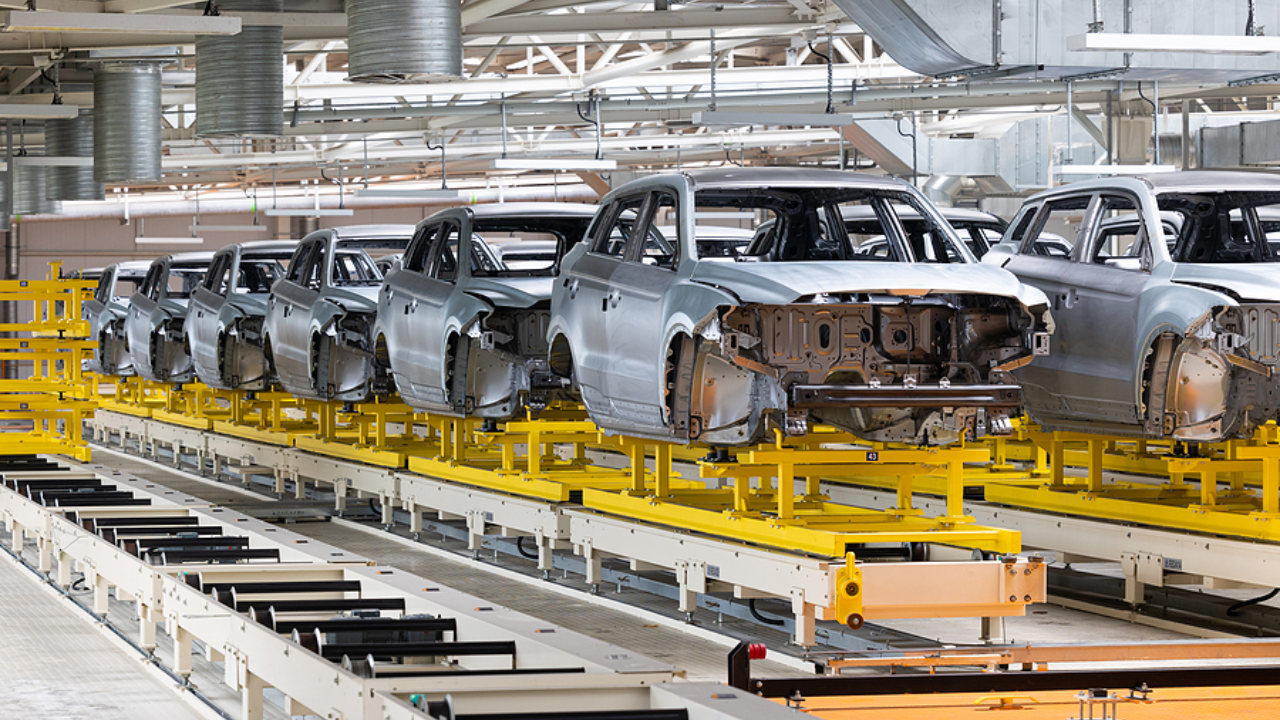
The Government of India has disbursed about Rs 2,377.56 crore under the Production Linked Incentive (PLI) scheme for the automobile and auto components sector. The scheme is part of a broader policy covering 14 sectors aimed at increasing domestic manufacturing, investment, and exports.
Production Growth in Auto and Auto Components
Under the PLI scheme, companies in the automobile and auto components segment reported incremental production of around Rs 13,126 crore in the current financial year up to December 2025. A total of 72 companies are part of the scheme in this sector.
Also read: MHI Updates PM E-DRIVE Scheme with New Caps and Deadlines for EV Subsidies
Electronics Sector Leads in Incentive Disbursement
While the automotive sector received Rs 2,377.56 crore, the electronics sector recorded a higher incentive disbursement of Rs 15,554 crore under its PLI programmes, including large-scale electronics manufacturing and IT hardware. In the same period, 59 companies in the electronics segment reported incremental production of about Rs 2,45,375 crore.
Overall PLI Scheme Performance
Across all 14 sectors, the PLI schemes have attracted investments of over Rs 2.16 lakh crore. Incremental production during the current financial year up to December 2025 stands at approximately Rs 4,20,581 crore. Since the launch of these schemes, total production or sales generated has crossed Rs 20.41 lakh crore, with exports exceeding Rs 8.3 lakh crore. The schemes have also contributed to employment generation for more than 14.39 lakh people, including both direct and indirect jobs.
Related Government Initiatives
Alongside the PLI schemes, several other programmes are being implemented to support manufacturing and supply chains:
- Semicon India Programme to develop domestic semiconductor capacity
- Electronics Component Manufacturing Scheme (ECMS), SPECS, EMC and M-SIPS for electronics ecosystem development
- PM Gati Shakti for infrastructure planning and logistics coordination
- National Logistics Policy focusing on reducing logistics costs and improving efficiency
- Scheme for manufacturing of rare earth permanent magnets
- National Critical Mineral Mission to secure supply of key minerals
Anmol Bohhre, MD Enigma EV, said, “From a startup founder’s perspective, the PLI numbers show that policy support is beginning to translate into real industrial output rather than just intent. Disbursements of ₹2,377.56 crore in the auto and auto components segment, alongside incremental production of ₹13,126 crore, suggest that companies are already expanding capacity, localising supply chains and making advanced manufacturing viable at scale. For EV startups, that matters because competitiveness is no longer only about demand incentives; it is also about creating a stronger domestic ecosystem for batteries, drivetrains, electronics and components. The fact that 72 companies have contributed to this momentum is encouraging, because it shows the scheme is broadening participation across the value chain. What will determine the next phase is consistency: predictable policy, faster vendor development and deeper investment in product quality. That is what will help India move from assembly-led growth to genuine technology-led manufacturing leadership.”
Sravan K Appana CEO iGo wise Mobility, said, “What stands out in the PLI update is not just the size of the incentive payout, but the larger signal it sends to the market: India wants manufacturing depth, not just sales growth. When a scheme disburses ₹2,377.56 crore and the sector still records ₹13,126 crore in incremental production, it tells startups that the economics of localisation are improving. For EV and mobility companies, that creates room to invest in components, software integration and supplier partnerships with greater confidence. Just as importantly, such policy support can help reduce the barrier to entry, so that innovative startups without deep pockets can participate meaningfully and build capabilities over time. The broader PLI performance is also important because it shows the government is trying to build an ecosystem across sectors, not in isolation, and that gives automotive startups access to lessons from electronics, logistics and advanced manufacturing. The next opportunity is to convert this policy push into stronger export capability, better cost structures and more resilient domestic supply chains. If that happens, EV startups will be able to compete on performance and reliability, not just on subsidy-driven adoption.”
Elctrik Speaks
The data indicates that while the automotive PLI scheme has begun contributing to incremental production, the scale of incentives and output remains lower compared to electronics. For the auto industry, especially electric mobility and advanced components, sustained investment and policy continuity will be important to expand domestic manufacturing capacity and reduce dependence on imports.